|
Computational Chemistry Intelligence Laboratory (CCIL)
Research Aim and Focus
The Computational Chemistry Intelligence Laboratory (CCIL) Group focuses on accelerating the discovery and optimization of advanced materials through the integration of materials informatics, machine learning, and computational modeling. Our research aims to establish innovative methodologies for predicting material properties, understanding complex mechanisms, and designing next-generation functional materials.
Interdisciplinary Approach to Research Challenges
Interdisciplinary knowledge is crucial for addressing complex research challenges and achieving innovative results. This is particularly true in fields like catalysis discovery, where experimental methods alone may not provide sufficient insight into the underlying electronic reasons for observed phenomena.
Leveraging Computational Methods
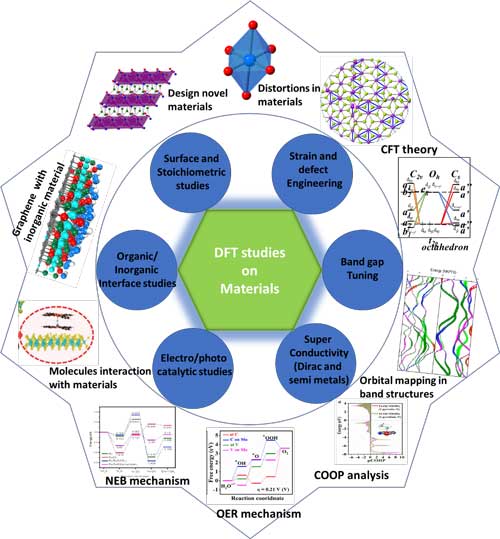
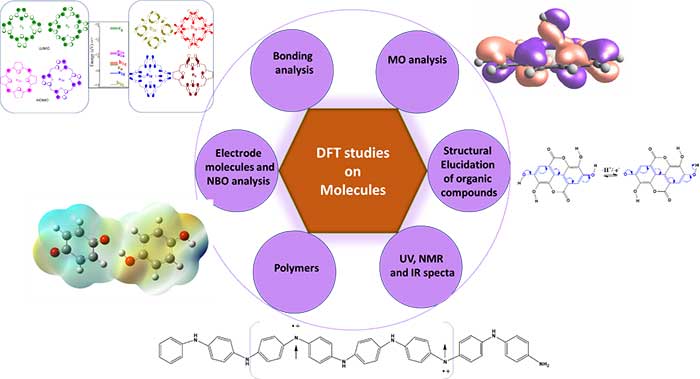
Computational methods, such as Density Functional Theory (DFT), offer valuable tools to complement experimental investigations. By analyzing electronic structures and energy landscapes, DFT can elucidate reaction mechanisms, predict properties of materials, and guide the design of new catalysts.
Bridging the Gap between Theory and Experiment
Our group is committed to bridging the gap between theoretical predictions and experimental applications. By combining computational chemistry with experimental techniques, we aim to:
- Solve Experimental Challenges: Utilize computational methods to address experimental limitations and identify effective solutions.
- Accelerate Discovery: Predict material properties and reaction mechanisms to guide experimental design and optimize processes.
- Design Novel Materials: Develop new materials with tailored properties for specific applications, such as energy storage, sensing, and electro/photo catalysis.
- Spearhead Data-Driven Discovery: Exploration and optimization of material compositions using active learning and data-driven approaches.
- Advance Materials Informatics: Development of advanced feature engineering techniques for extracting and designing descriptors required for materials data analysis, alongside dimensionality reduction, structural feature extraction, and automated data-generation methods for spectral and image datasets.
- Deploy Autonomous Platforms: Efficient acquisition and accumulation of materials data and descriptors through autonomous, automated platforms.
- Build Generative AI Frameworks: Development of automated molecular and materials generation frameworks for exploring unexplored chemical spaces and enabling extrapolative materials discovery.
- Optimize Small-Data Environments: Design of robust materials search and optimization strategies for small-data environments, where experimental or computational data are limited.
Our future research will continue to explore a wide range of topics, including:
- Gas Storage and Sensing: Investigating the properties of nanoparticles, surfaces, and MOFs for gas storage and sensing applications.
- Defects in Semiconductors: Analyzing the impact of defects on the optoelectronic and vibrational properties of 2D materials.
- Energy Devices: Studying solid-state batteries, inorganic/organic interfaces, surface phenomena, and supercapacitors.
- Machine Learning: Applying Machine Learning (ML) techniques to accelerate materials discovery, predict properties of novel compounds, and optimize computational workflows for catalysis and energy applications.
By combining theoretical insights with experimental validation, we strive to make significant contributions to the advancement of materials science and chemistry.
|
|